Design ideas · Printed, Colored & Shaped Bags
Green Mylar Bags Design Ideas That Sell
By the Mylar Bags NYC team · · 6 min read
In this guide
- What great design does for products
- 10 design ideas for green mylar bags
- Putting it together: an example
- Color psychology by product type
- Building brand recognition over time
- Typography on flexible packaging
- Mockups and product photography
- Choosing colors and typography
- Printing methods and finishes
- Windows, shapes and features
- Labels and information to include
- Designing for different channels
- Building a packaging design brief
- Budget-friendly design upgrades
- Sustainability messaging that works
- Testing your design
- From idea to proof
- Questions to ask your packaging supplier
- Design mistakes to avoid
- In summary
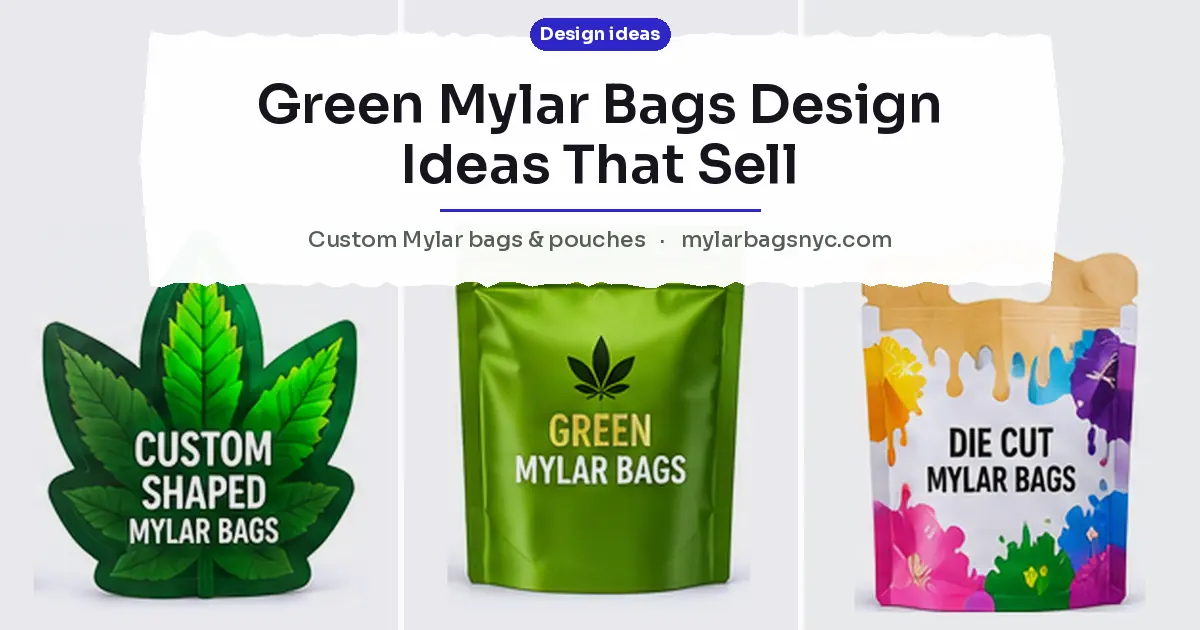
Great designs for green mylar bags do more than hold products. They grab attention on crowded shelves, communicate quality and flavor at a glance, and make customers want to buy again. This guide shares practical design ideas for custom green mylar bags, from color and typography to finishes, windows and labeling.
Each idea is practical, used by real brands, and works within normal production budgets.
What great design does for products
Shoppers decide in seconds. Your bag is often the first thing they see on a shelf, in a dispensary case or in an online listing. Good design makes products look fresh and desirable, sets price expectations and makes your brand easy to find again.
Design is practical too. Clear hierarchy helps customers find flavor, weight and key information, and features like colored films or zippers protect the product.
10 design ideas for green mylar bags
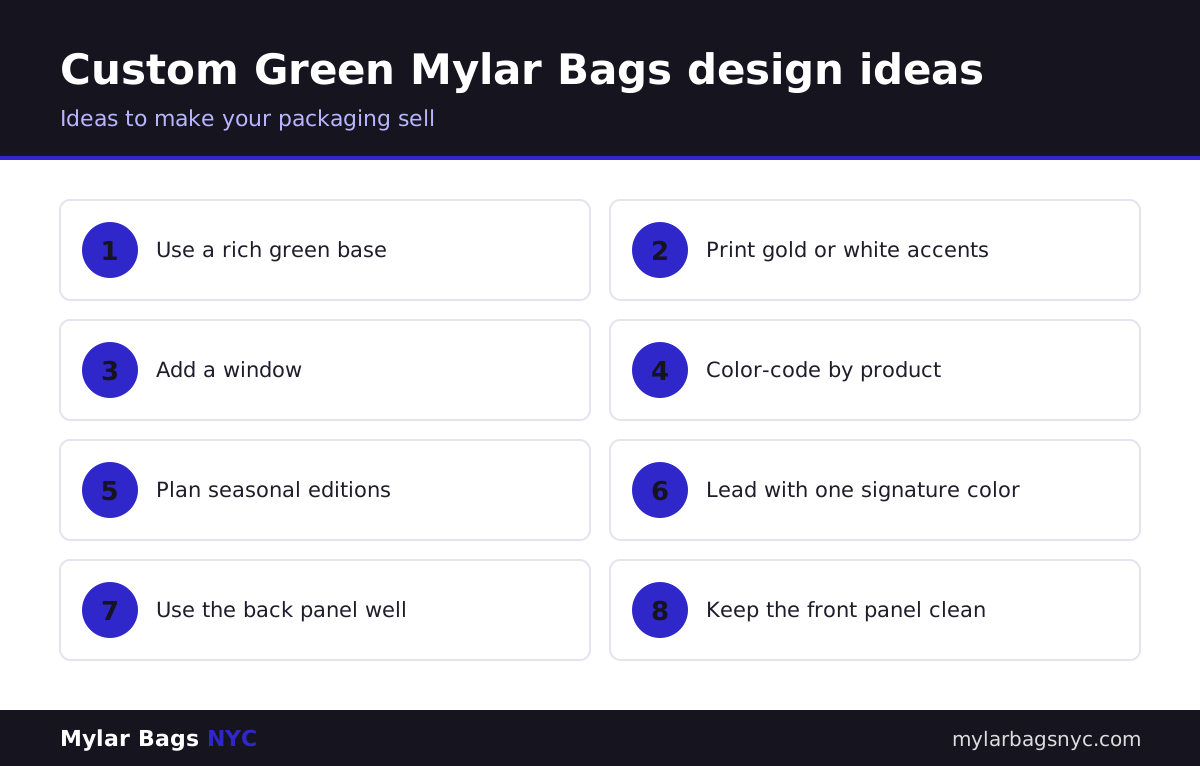
1. Use a rich green base
This works especially well for green mylar bags because shoppers notice it the moment they see the bag.
2. Print gold or white accents
This works especially well for green mylar bags because shoppers notice it the moment they see the bag. It pairs well with the other ideas on this list.
3. Add a window
This works especially well for green mylar bags because shoppers notice it the moment they see the bag. We can show this on your digital proof before you commit.
4. Color-code by product
It is a simple change that makes green mylar bags look more professional without adding much cost. It pairs well with the other ideas on this list.
5. Plan seasonal editions
Limited-edition artwork on the same template keeps costs low and creates urgency. It pairs well with the other ideas on this list.
6. Lead with one signature color
A single, ownable color across every bag makes your brand instantly recognizable on shelves and in feeds.
7. Use the back panel well
Put your story, usage tips, ingredients and required information on the back, in a clear hierarchy.
8. Keep the front panel clean
Logo, product name, flavor or variant and one key benefit are enough. It pairs well with the other ideas on this list.
9. Use one premium effect
Spot gloss on the logo or a holographic accent delivers more impact than several effects. It pairs well with the other ideas on this list.
10. Add a QR code with purpose
Link to lab results, recipes, reorder pages or reviews, and say what customers will get. We can show this on your digital proof before you commit.
Putting it together: an example
Imagine a Brooklyn brand launching new green mylar bags. They choose a matte base in one signature color, add spot gloss to the logo, use a clear window to show the product, and print a short brand story and QR code on the back.
For each flavor or variant they change only the accent color and name, keeping the layout identical. The result looks like a collection on shelf, costs less to produce and is easy to expand.
Color psychology by product type
Different categories use color differently. Coffee brands often use kraft, black or deep earthy tones to suggest richness. Snack and candy brands use bright, saturated colors to suggest fun and flavor. Cannabis brands often use black, holographic or jewel tones for a premium, adult feel. Health and supplement brands lean toward white, green and clean neutrals. For green mylar bags, choose colors that fit your category while standing apart from direct competitors.
Building brand recognition over time
Consistency compounds. When every bag in your range uses the same layout, logo position and type, customers learn to spot your green mylar bags instantly, even from across a store or in a crowded feed. Change colors and names for each variant, but keep the system steady, and introduce new editions within the same framework.
Typography on flexible packaging
Bags curve and crease when filled, which can distort small or thin type. Use bold, simple fonts for product names, keep body text at a legible size, and avoid placing important text near folds, gussets or seals. High contrast between text and background matters even more on metallic and holographic films.
Mockups and product photography
Before launch, create realistic mockups of your green mylar bags for your website, marketplace listings and social media. Photograph filled bags in natural light, from the front and at an angle, so customers can see size and finish. Good photography helps online shoppers understand what they're buying and reduces returns.
Choosing colors and typography
Black and deep jewel tones with metallic or holographic accents feel premium. Bright, saturated colors feel playful and energetic. Kraft and earthy tones signal natural and organic. White and clear films feel clean and modern.
For type, pair one distinctive display face for your name with one clean, readable face for details. Make sure small text is legible on curved, flexible surfaces.
Printing methods and finishes
Digital printing is ideal for short runs and multiple designs, with no plate costs. Rotogravure printing gives rich color and the lowest unit price on large runs. On clear or metallic films, white ink underprinting keeps colors vivid.
Finishes add personality: matte lamination feels modern, gloss makes colors pop, soft touch feels velvety, spot gloss highlights a logo, and holographic film creates shimmer under store lights.
Windows, shapes and features
A window builds trust by showing the product, but place it where it won't reveal settling or crumbs. Die-cut shapes create memorable silhouettes. Zippers, tear notches, hang holes and valves should be planned into the artwork so they don't cut through your logo.
Labels and information to include
What you print depends on the product. Food and supplements need specific FDA panels; regulated products such as cannabis need state-required warnings and symbols; general retail products need clear identity, net quantity and contact details. Leave room on the template for every panel you need.
We'll leave space on the template for every required panel and can print batch codes, barcodes and QR codes.
Designing for different channels
On retail shelves, the front panel must communicate brand and product in seconds. In dispensaries and specialty stores, staff may present the bag by hand, so the back panel matters. Online, your bag appears as a small thumbnail, so bold color and a simple logo help. On social media, a distinctive pattern makes posts recognizable.
Building a packaging design brief
A clear brief saves time and revisions. Include:
- Logo files, brand colors (Pantone if possible) and fonts.
- Product names, variants and how many designs you need.
- Required text: ingredients, warnings, weight, compliance panels.
- Examples of packaging you like and dislike.
- Quantities, sizes and target delivery date.
Budget-friendly design upgrades
You don't need a big budget to make green mylar bags stand out. Use one signature color with white ink on a metallic base, keep the same template for every variant, and add stickers or labels for short runs. Spot gloss on the logo alone often delivers more impact than full-coverage effects.
Sustainability messaging that works
If you use recyclable or compostable structures, say so clearly and specifically, with disposal instructions. Avoid vague claims and only show certification logos you actually hold.
Testing your design
Before a full run, review the digital proof at actual size, print a paper mockup and wrap it around a filled bag. Check that seals, zippers and windows don't cut through key artwork, small text is legible and colors look right under store lighting.
From idea to proof
Send your logo, brand colors and examples of packaging you like. We'll place your artwork on the correct template, suggest finishes and send a free digital proof. Once you approve it, production takes 10 to 15 business days.
Questions to ask your packaging supplier
- Is digital or rotogravure printing better for my green mylar bags quantity?
- Can you print white ink under my colors on metallic film?
- Where should the window, zipper and seals sit on my artwork?
- Can I see a digital proof and a physical sample?
- What are the price breaks by quantity?
Design mistakes to avoid
- Placing key text in seal or zipper areas.
- Using low-resolution images.
- Too many fonts and colors.
- Tiny, low-contrast compliance text.
- Ignoring how the bag looks when filled and slightly curved.
In summary
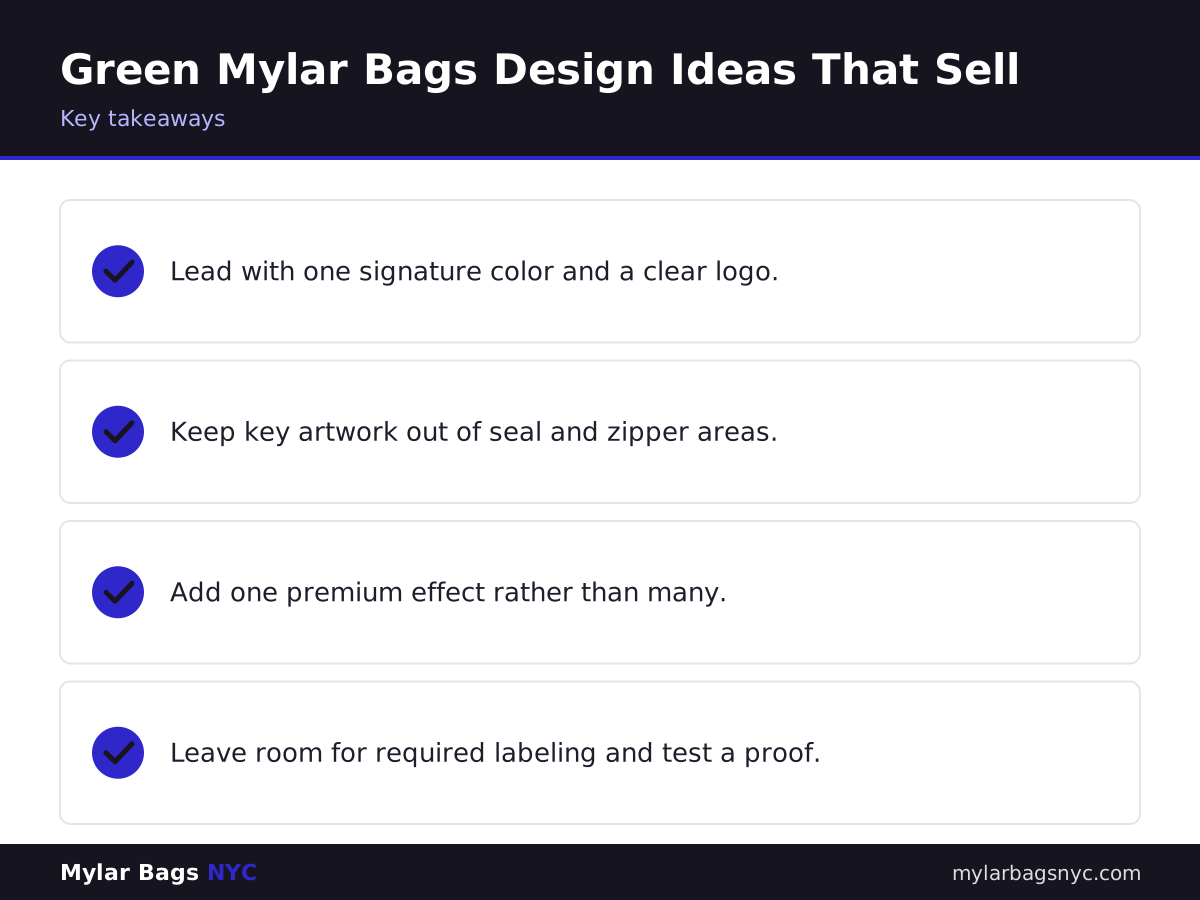
The best green mylar bags designs are simple, consistent and built for how your product is sold. Pick a signature color, make your logo easy to see, add one premium effect, and keep required information clear.
Ready to bring your design to life? Get a free quote and a digital proof from our team.
FAQ
Frequently asked questions
Can I print full color on green mylar bags?
Yes. We print CMYK full color, Pantone spot colors and white ink on clear and metallic films.
Which finishes look most premium?
Matte with spot gloss, soft touch, and holographic accents are popular premium combinations.
Do you help with design?
Yes. Every order includes free artwork checks and a digital proof.
How much do custom green mylar bags cost?
Price depends on size, quantity, film, printing and features. Send your specs for tiered pricing within one business day.